.avif)
-
17/12/25 3:30 pm


Understanding Labour's housing leadership is crucial for landlords navigating the evolving regulatory landscape. The appointment of key housing ministers shapes policy direction and affects how rental sector reforms are implemented.
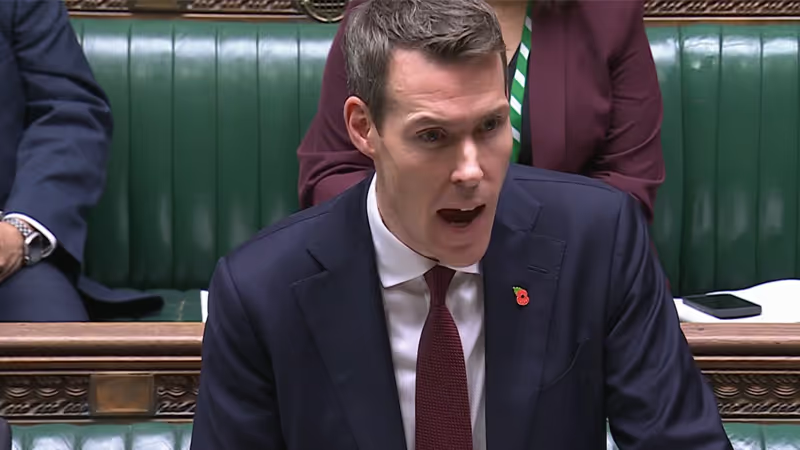
Matthew Pennycook was appointed as Minister of State in the Department for Levelling Up, Housing and Communities (DLUHC) in July 2024, following Labour's general election victory. His appointment came a day after Angela Rayner was confirmed as Secretary of State for Levelling Up, Housing and Communities and Deputy Prime Minister.
The appointments were part of a broader ministerial reshuffle that saw Labour take control of housing policy after years of Conservative leadership. At the time, landlords expressed mixed reactions to Pennycook's appointment, given his track record on rental sector issues.
Pennycook, who represents Greenwich and Woolwich, had served as shadow housing minister since 2021. His appointment brought continuity to Labour's housing policy development, as he had been instrumental in shaping the party's approach to rental sector reform during their time in opposition.
The choice of housing minister significantly impacts how rental sector policies are developed and implemented. Pennycook's background reveals several key factors landlords should understand:
Policy experience and approach
Pennycook was heavily involved in shaping the previous Renters (Reform) Bill, which aimed to abolish Section 21 evictions and introduce other significant changes to tenancy law. Although that bill did not pass due to the 2024 general election being called, many of its provisions have been incorporated into Labour's Renters' Rights Act.
His policy positions include support for ending 'no-fault' evictions and introducing measures to prevent rent 'bidding wars' between prospective tenants. These stances suggest a tenant-focused approach to housing policy.
Industry relationships
Despite his pro-tenant reputation, the National Residential Landlords Association (NRLA) noted that Pennycook had shown a more collaborative approach in private discussions. [Internal link: NRLA policy positions] — The organisation reported that he acknowledged the need for improved court processes when discussing Section 21 reforms.
Shelter connections
Pennycook's close relationship with housing charity Shelter has been noted by industry observers. This connection influences his policy priorities and approach to housing issues, typically favouring tenant protections over landlord concerns.
Understanding the current housing ministry structure helps landlords prepare for ongoing policy changes:
Stay informed about policy developments
Monitor announcements from DLUHC and track the implementation timeline for the Renters' Rights Act, which comes into effect in May 2026. Key changes include the abolition of Section 21 evictions and new restrictions on rent increases. For further reading, see Six months to go: Are you and your agent ready for the Renters’ Rights Act?.
Review your tenancy agreements
Consider how upcoming changes might affect your current and future tenancy arrangements. The new legislation will require significant adjustments to standard practices. For guidance, check out Providing a Reference, which covers best practices and legal considerations for landlords.
Understand the bidding wars ban
The Renters' Rights Act prohibits landlords and agents from encouraging or accepting rental bids above the advertised price. This mirrors legislation introduced in New Zealand and aims to prevent tenants from competing against each other with higher rent offers.
Prepare for enhanced tenant rights
New provisions will make it easier for tenants to challenge rent increases and extend notice periods for various circumstances. Landlords should factor these changes into their business planning. The article Rent review clauses and the changes to them from the Renters' Rights Act gives insight into how these changes affect rent reviews and tenant rights.
Consider insurance implications
Policy changes may affect your insurance needs and coverage requirements. Total Landlord offers comprehensive protection that adapts to regulatory changes, helping landlords maintain coverage as the legal landscape evolves. Read more on market outlook and insurance considerations in Landlord insights: Market outlook and strategic advice.
The housing ministry appointments occurred during a period of significant policy transition. The previous Conservative government's Renters (Reform) Bill had progressed through the House of Commons but failed to complete the parliamentary process before the 2024 general election was called in May.
Labour's subsequent Renters' Rights Act incorporates many similar provisions, with implementation beginning in May 2026. This timeline gives landlords and agents time to prepare for the changes.
The policy development reflects broader Labour priorities around housing supply and tenant protections. As Pennycook stated upon his appointment: "Tackling the housing crisis and boosting economic growth is integral to national renewal."
Who is the current housing secretary?
Angela Rayner serves as Secretary of State for Levelling Up, Housing and Communities, making her the senior minister responsible for housing policy. She also holds the role of Deputy Prime Minister.
What is Matthew Pennycook's specific role?
As Minister of State for Housing, Pennycook focuses on rental sector policy, housing supply issues, and the implementation of tenancy law reforms. He reports to Angela Rayner within the DLUHC structure.
How will the Renters' Rights Act affect landlords?
The Act introduces several significant changes, including the abolition of Section 21 'no-fault' evictions, restrictions on rent bidding wars, and enhanced tenant rights to challenge rent increases. Implementation begins in May 2026.
What happened to the previous Renters (Reform) Bill?
The Conservative government's Renters (Reform) Bill did not complete the parliamentary 'wash-up' process before the 2024 general election. It was effectively scrapped when Parliament was dissolved, though Labour has incorporated many of its provisions into their own legislation.
Will there be rent controls under Labour?
Labour has stated it does not intend to introduce rent controls that set initial rental prices. However, the Renters' Rights Act does include measures to limit rent increases within tenancies and prevent bidding wars.
How can landlords prepare for policy changes?
Stay informed about implementation timelines, review current tenancy practices, consider insurance coverage needs, and engage with industry bodies like the NRLA for guidance on compliance requirements.
What support is available for landlords adapting to changes?
Professional landlord insurance providers like Total Landlord offer guidance and coverage that adapts to regulatory changes. Mydeposits provides tenancy deposit protection services that comply with evolving requirements.
Who is Labour's housing minister?
Matthew Pennycook serves as Minister of State for Housing within the Department for Levelling Up, Housing and Communities, working under Secretary of State Angela Rayner.
When was Matthew Pennycook appointed housing minister?
Pennycook was appointed in July 2024 following Labour's general election victory, taking up the role he had shadowed since 2021.
What are Matthew Pennycook's main policy priorities?
His key priorities include implementing the Renters' Rights Act, abolishing Section 21 evictions, preventing rent bidding wars, and increasing housing supply.
How will the new housing minister affect landlords?
Pennycook's tenant-focused approach means landlords can expect enhanced tenant protections, stricter regulations on evictions, and new restrictions on rental practices.
What is the Renters' Rights Act?
Labour's flagship rental sector legislation that abolishes Section 21 evictions, bans rent bidding wars, and introduces new tenant protections, coming into effect in May 2026.
Will rent controls be introduced under Labour?
No, Labour has confirmed it will not introduce rent controls that set initial rental prices, though the Renters' Rights Act does limit rent increases within tenancies.
How can landlords prepare for upcoming changes?
Review tenancy agreements, understand new legal requirements, consider insurance implications, and stay updated on implementation timelines through industry bodies and professional advisors.
What happened to the previous rental sector reforms?
The Conservative government's Renters (Reform) Bill failed to pass before the 2024 election, but Labour has incorporated many of its provisions into their own Renters' Rights Act.
Who else is involved in Labour's housing policy?
Angela Rayner leads housing policy as Secretary of State, with additional ministers expected to be appointed for specific areas like homelessness and local government.
Where can landlords get guidance on policy changes?
The NRLA provides industry guidance, while professional services like Total Landlord Insurance and mydeposits offer compliance support and updated coverage options.
Tags:




.avif)



.avif)




Comments