.avif)
-
27/8/26 2:49 pm


A new government report has provided an early warning of the pitfalls private landlords should avoid when Awaab’s Law takes effect.
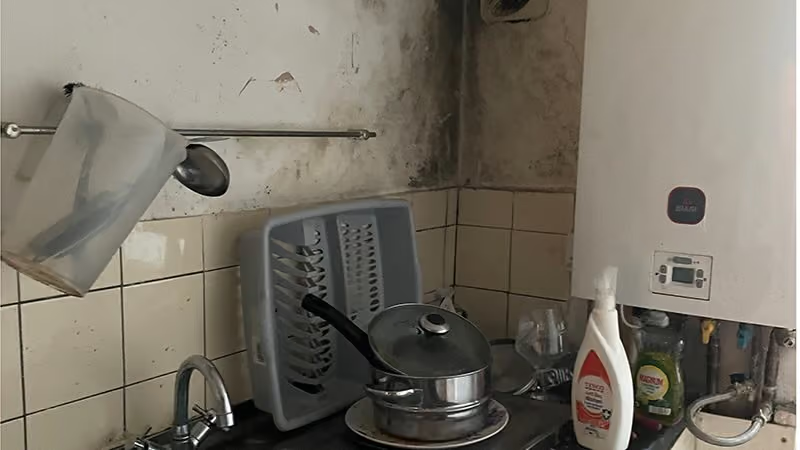
Social landlords have had to act quickly to fix emergency issues, as well as dangerous damp and mould, since last October, but the research reveals that while emergency hazards were generally dealt with quickly, the real difficulty came with damp and mould, where they struggled with diagnosis, coordinating contractors and completing permanent repairs.
“While many felt existing emergency arrangements aligned relatively well with the 24-hour requirement, damp and mould cases were seen as more difficult to progress from inspection to effective remediation, particularly where works were complex or specialist input was needed,” it explains.
Late, ambiguous or internally inconsistent guidance has also driven compliance anxiety, defensive practice and uneven delivery. “This was particularly evident in complex areas such as no-access scenarios - where landlords are unable to obtain access to homes to conduct repair work within the statutory timeframe.”
The research found that tenants are often willing to accept some delay if landlords keep them informed and there is visible progress. Complaints escalated when communication stopped, appointments were missed or no one took ownership of the case.
The report stresses the importance of written inspection summaries, keeping tenants updated and maintaining clear records.
If something is dangerous, including severe damp and mould where there is an imminent risk to health, landlords must investigate the problem and make it safe within 24 hours. For significant damp and mould hazards that are not emergencies, they must investigate within 10 working days and explain what they’ll do within three working days in a written summary, then carry out urgent safety work within five working days of the investigation, and start longer-term repairs within 12 weeks.
Under new rules coming into force on 30th November, more hazards will be covered including electrical faults, risks of falling, structural defects, excess cold and heat, fire risks and hygiene issues such as pest infestations. The third and final phase will be introduced in 2027, extending action to all remaining hazards in the Housing Health and Safety Rating System, except overcrowding.
However, the report adds that many social landlords don’t feel prepared for the next phases as guidance is still unclear and the next hazards are more subjective.
The government is still consulting on a final date to introduce Awaab’s Law to the PRS.
Tags:











%20(800%20x%20450%20px).avif)
.avif)






Comments