.jpg)
-
22/10/26 11:05 am


Landlords are underestimating the scale and cost of meeting the reformed Decent Homes Standard and risk being caught in a compliance crunch if they delay preparations, a property expert has warned.
The new rules, which require higher quality thermal comfort and energy efficiency than the previous standard, could also lead to even higher costs, says Mark Dawson, managing director at AST Assistance (pictured).
Dawson reckons despite a 2035 deadline for landlords in the PRS to comply, it’s a good idea to start figuring out the remediation costs per property, factoring in contractor rates and the interaction with EPC upgrade costs, and to build a compliance roadmap that sequences work across properties, prioritises Category 1 hazard remediation first, and creates a record of compliance planning.
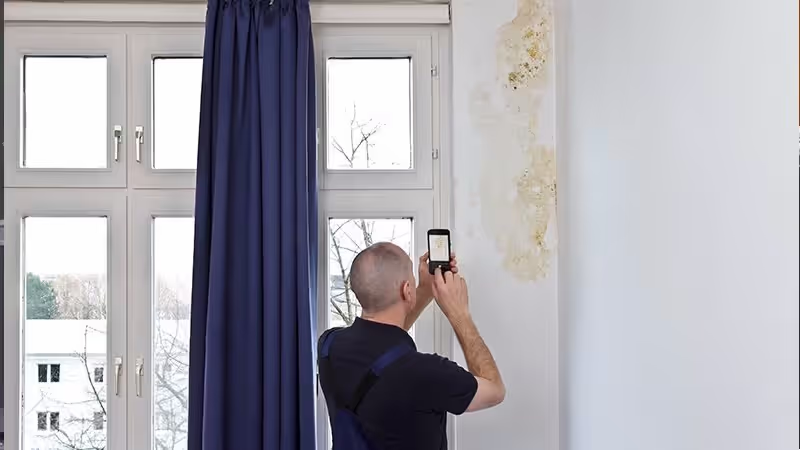
He suggests landlords should commission a formal property condition survey benchmarked against the new criteria and identify those most likely to fail including thermal comfort, damp, heating system age, and structural disrepair, which are the most common triggers in pre-1980s stock.
Timing is important as many tradespeople are already operating at capacity in many regions, adds Dawson. “If landlords delay commissioning assessments and planning remediation work, they will risk missing the opportunity to find an available contractor and their ability to meet the deadline will be out of their control.”
The reformed Decent Homes Standard is built around four criteria that all private rented properties must meet by 2035: Freedom from Category 1 hazards under the Housing Health and Safety Rating System (HHSRS); the property must be in a reasonable state of repair; there must be reasonably modern facilities and services, including adequate heating, sanitation, and kitchen facilities, that are 20 years old or less; and effective insulation and thermal comfort – a criterion that will increasingly overlap with Minimum Energy Efficiency Standards (MEES) and EPC requirements.
In England, 22% of privately rented homes failed to meet the Decent Homes standards in 2024-25. According to the English Housing Survey it costs an average of £9,266 to bring a non-decent private rented home up to the current standard. However, landlords who hold older terraced and converted stock in the North and Midlands face both the highest failure rates and some of the highest remediation costs in the country. In the North East on average it costs £9,508 to make a non-decent dwelling compliant - the highest of any region - compared to £6,408 in the West Midlands and £6,823 in the South East.
More pressure will come from tenants and tenant advocacy groups who will soon be able to see local authority enforcement data relating to housing standards, he warns. “Landlords with a history of non-compliance will face a different market. Tenants would rather rent compliant properties, so the reputational damage that can come from the Decent Homes Standard needs to become part of the mainstream landlord conversation.”
Tags:











.avif)
%20(800%20x%20450%20px).avif)






Comments