.avif)
-
27/8/26 2:49 pm


A tax advisor has urged landlords to get hold of Making Tax Digital for Income Tax Self-Assessment software ahead of the 6th April implementation date.
Those with annual income of £50,000 or more - from both properties and self-employment combined - in the 2024-2025 tax year will need to comply with the new system which will extend to those earning £30,000 from 2027 and £20,000 from 2028.
Making Tax Digital will require submitting quarterly updates using the new software on 7th of August, November, February and May each year. Landlords will also need to keep these digital records for five years. An additional final declaration, like the current Self-Assessment return, including any non-business income, will have to be submitted by 31st January to claim any allowances or reliefs.

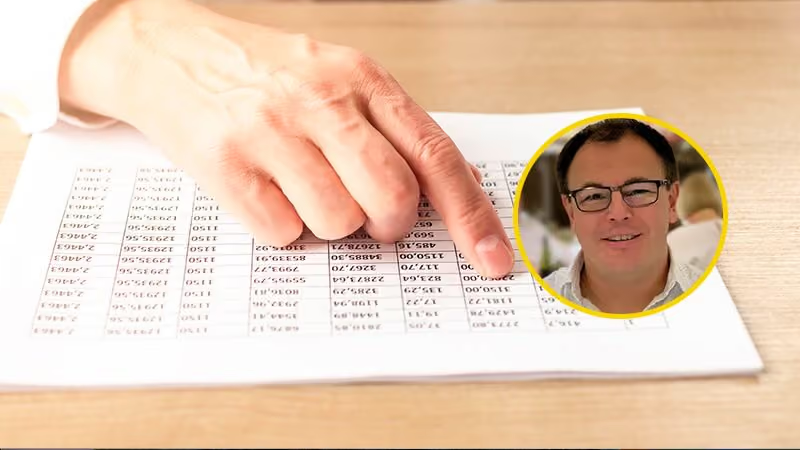
Barry Soraff, partner at Xeinadin, says it’s a good idea to get the cloud-based accounting software, such as Zero or Intuit QuickBooks, ahead of time. These interact with HM Revenue and link with your bank account.
“The AI processing will make record-keeping easier,” Soraff tells LandlordZONE. “Although it might feel like you need to do more work, as there are three more filings a year, the software takes care of it. People might panic initially but it should ultimately make landlords’ lives easier.”
Landlords with more than one property won’t need a digital account for each one – they can be included in a single set of records - as the tax threshold applies per taxpayer, not per property.
However, HMRC is increasing penalties for late submissions and payments, using a points threshold system. One penalty point will be applied for each missed deadline and a fine imposed if you reach four points. Once you reach the threshold, you’ll be charged a fixed £200 penalty, and every subsequent late submission while at that threshold will result in another £200 fine.
For those landlords who don’t live in the UK or are UK ‘non-doms’, rules only apply to rental earnings from UK properties of more than £50,000 a year, while if you live in the UK but own property overseas from which you earn more than £50,000 a year in rental income, MTD for Income Tax requirements apply.
If a property is jointly owned, gross income will be determined by the share of income from the property - usually based on ownership share – which for married or civil partners, defaults to 50/50.
According to the guidance, you’re automatically exempt if you are a trustee, don’t have a National Insurance number, a personal representative of someone who has died, Lloyd’s member, in relation to your underwriting business or non-resident company.
For more information, the NRLA has a tax guide.
Tags:











%20(800%20x%20450%20px).avif)
.avif)





Comments