.jpg)
-
22/10/26 11:05 am


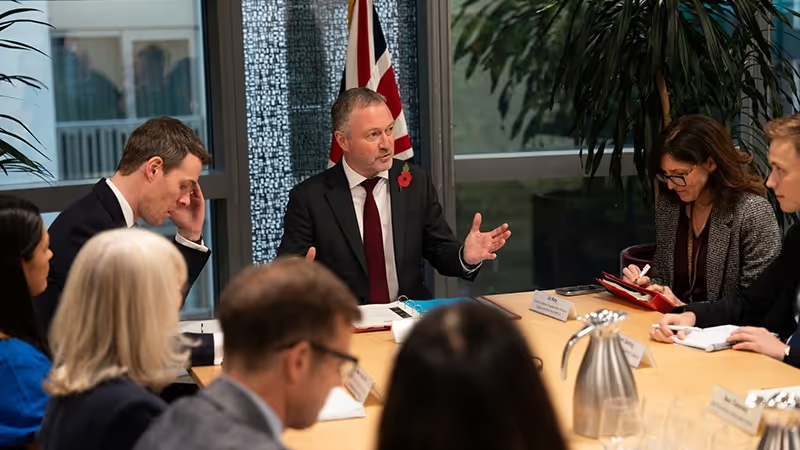
Housing Secretary Steve Reed has taken a swipe at buy-to-let landlords by insisting that public money should be redirected from subsidising private rents to funding new homes.
He told Lloyds Banking Group’s Social Housing Forum that decades of right-to-buy without replacing sold council homes had increased reliance on the PRS, leading to higher housing benefit spending.
“Taxpayers pay tens of billions in benefits to subsidise private landlords to rent out homes that taxpayers also paid to build,” said Reed. “Today, over four in ten homes sold under right-to-buy are rented out privately. That’s the same home now rented out to tenants at twice or three times the rent compared to when it was a council home. And taxpayers pick up the bill for the difference.”
Reed added that the government was radically overhauling right-to-buy to protect the social housing stock and stop newly built homes being sold off. “At the core of our plan is the simple common sense that it’s better to spend taxpayer’s cash building new homes than subsidising buy-to-let landlords.”
Labour has vowed to spend a record £39 billion through its Social and Affordable Homes Programme, which includes a target of at least 60% of homes to be for social rent.
However, a new report by the Centre for Policy Studies points out that this would deliver 15,494 homes – just 5% of the government’s annual housing target for England and highlights the astonishing difference between social and private rent.
Once built, the average social rent home in England charges a rent of £5,942 a year and costs £6,280 a year in maintenance and management costs. This means that social rent homes don’t cover their ongoing expenses and will never begin to pay off the large initial taxpayer sum spent on building them in the first place.
It adds: “On top of subsidising construction, the government explicitly subsidises housing in England by awarding £32 billion in housing benefit and Universal Credit housing allowance – £22 billion of which goes to cover the rents of those in social housing and therefore already benefitting from lower rents."
As the average English social home is let out for £10,250 less than the average privately rented property, across roughly 4.2 million social homes, this amounts to an implicit subsidy of £43 billion a year in 2025.
Report author Ben Hopkinson adds: “The only way to get housing costs down across the board is to build more homes – we are 6.5 million short of where we should be, and Burnham’s plans are at best a distraction and at worst a barrier to achieving the level of housebuilding we need.”
Tags:











.avif)
%20(800%20x%20450%20px).avif)






Comments