Akiva worked in the charity sector and property management before joining the legal team at Landlord Action. He has helped countless landlords get back possession of their property from some of the most difficult tenants.”
Alex Nolan, Senior Training Manager at NRLA, provides expert training on HMO management, tenancy processes, and rental sector legislative updates.
Alphaletz is designed to be a simple, cost-effective solution to these problems. Their mission is to free you from the burden of spreadsheets and paperwork, so you can free up time and keep an eye on your profits.
Partner at Xeinadin. Xeinadin is a leading provider of accountancy services and business advice for small and medium-sized enterprises and individuals across the UK and Ireland.
Established in 1860 to care for abandoned animals, Battersea aims to never turn away a dog or cat in need of help. In 2023, we helped 2,529 dogs and 2,450 cats across our three centres. Our work means we see day-to-day the many animal welfare issues facing dogs, cats and the people who care for them.
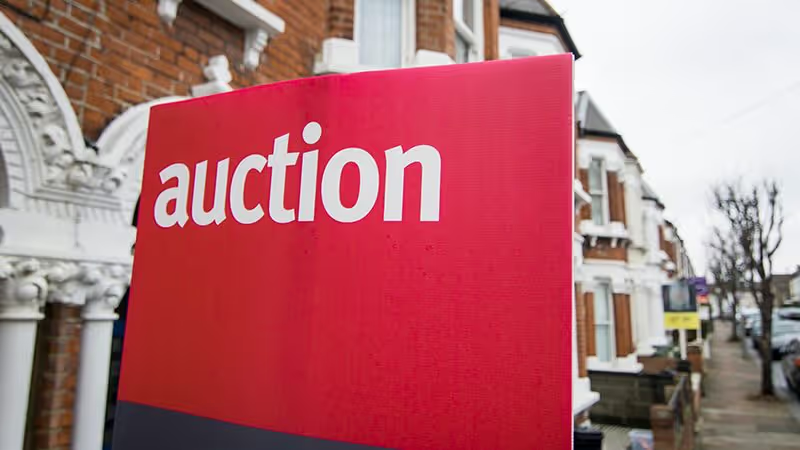
Investors are increasingly looking beyond traditional buy-to-let as sales of larger properties at auction record big increases.
Owners of a purpose-built student accommodation block in Coventry have submitted plans to turn part of it into two HMOs.
Tenants’ group Acorn has sparked a war of words with landlords after its online post labelled them “vindictive, greedy so-and-sos”.
Having the right forms, notices and agreements is a crucial element of the new Renter’s Rights Act
Buy-to-let purchase searches have dropped by 22% in the last year, according to Twenty7Tec’s latest mortgage market data.
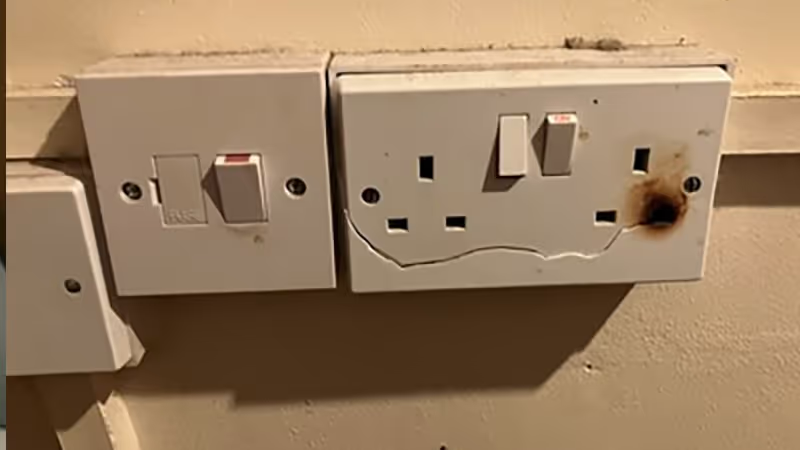
Landlords whose properties have serious defects will be liable for civil penalties of up to £40,000 under revised health and safety standards.
Three times more landlords say they have sold property than purchased property during the past year, according to an NRLA poll.
Residents from a London borough have failed to convince the government to introduce tough new laws on HMO conversions.
A new information hub aims to take on the NRLA by becoming the default, first-stop online resource for UK landlords.
Citizens Advice reports that 51% of renters using a zero-deposit scheme were misleadingly told they needed to use it to rent their home.
Another two councils have outlined plans to come down harder on HMO conversions.
Landlords will need support as well as funding to hit ambitious EPC C targets, the NRLA has warned.
Local councils will get a share of £10 million to refurbish empty retail units under the government’s high street rental auctions scheme.
Landlords must have greater confidence to let to formerly homeless tenants if the Renters’ Rights Act is to create a fairer PRS.
The Voice of Landlords Associations has urged Steve Reed to justify English councils' adoption of a civil penalty fines model.
Tenants’ unions have pledged to help private renters challenge rent increases at tribunal by launching an online rent rise checker.
A rogue landlord has been told to pay £25,224 after he ignored Southend Council’s order to stop renting out an unsafe property.
Cost pressures and reforms are likely to discourage investors and accelerate exits from those landlords with lower margins or higher leverage.
Landlords in Wales now have 14 days to tell tenants there has been a variation to the terms of their occupations contract – or risk a daily penalty.
Landlords warned delaying EPC upgrades to 2030 risks higher costs, retrofit bottlenecks and regulatory uncertainty, as government reforms tighten stan
Unions and tenants’ groups have urged the government to introduce rent controls as new figures show average UK rents rose again in May.
Another Reform-led council has pledged to clamp down on the uncontrolled spread of HMOs.
The 31 May 2026 deadline is in just a couple of days’ time. All residential landlords and their agents in England must serve the Information
A new mapping tool designed to identify likely substandard private rented hotspots could make it easier to target rogue landlords.
Landlords back tougher standards, but fear councils may use new enforcement powers to raise revenue through harsh fines.
AI-powered communications and operations platform askporter has teamed up with Checkatrade to help landlords with repairs and maintenance.
The government has vowed that it will monitor data on disputes, possession activity and rent challenges following new reforms.
Nottingham Council claims landlords have gained improved knowledge, standards and best practice worth £3.6 million through signing up.
The UK commercial property market shows resilience in the face of some new challenges.
Hinckley and Bosworth Council plans to introduce an Article 4 Direction across more of the borough, months after deciding to bring in restrictions.
A PRS expert has reassured anxious landlords there is still time to serve the mandatory information sheet by 31st May.
Licensing offences now account for more than half of the £24.1 million in fines handed to landlords and letting agents in London.
Andy Burnham’s housing agenda sparks debate over tougher landlord regulation as his national Labour profile grows.
Paul Shamplina has warned that the expected impact from the abolition of Section 21 has yet to show up in government data.
While there is no tangible evidence that commonhold will lead to lower upkeep costs, that’s not to say that this won’t happen in the future.
An HMO landlord has been found guilty of a string of offences relating to three properties with rodent and cockroach infestations.
1 May 2026 represents a sea change in the PRS in England; new laws, new rules and regulations bring challenges many landlords have not faced before
Nottingham councillor Faith Gakanje-Ajala has been told to pay more than £10,000 for failing to license an HMO.
Section 21's last stand was those notices served in the run-up to the introduction of the Renters’ Rights Act 2025 (RRA) in England - are they valid?
Greater Manchester mayor Andy Burnham has called for councils to be given stronger powers to take over rogue landlords' homes.
Shirley-Anne Somerville has been appointed Social Justice and Housing Secretary in the Scottish Government as part of a top team reshuffle.
The NRLA has taken over responsibility of the Lettings Industry Council under a new partnership.
Average UK monthly private rents increased by 3.5% to £1,381 in the 12 months to April, according to the latest ONS figures.
Stamp duty and council tax should be scrapped and replaced with a new proportional property tax, according to a new report.
The Build to Rent Alliance has launched a code of practice in a bid to position the BTR sector as the “rental destination of choice”.
Professional landlords are largely undeterred by regulatory changes, says Handelsbanken, with 93% expecting their portfolio value to rise in 2026.
A rogue landlord who rented out an unheated outhouse to a couple with a four-month-old baby has been banned from the PRS.
The NRLA is expanding beyond its traditional landlord base by offering a new service to build-to-rent operators, investors and funders.
Nearly half of UK landlords (49%) would be unlikely to rent their property to smokers, compared with 39% who say the same for vapers.
The share of homes bought by landlords has climbed to its highest level since 2016, driven by rising landlord-to-landlord sales.
Add a Middle East war, souring mortgage costs and a political crisis at home. What does all this mean for the rental market?
Landlords in Telford and Wrekin will have to fork out £1,522 for a licence when the council’s new additional scheme launches in August.
Build-to-rent developments will suffer if the government U-turns on rent controls, according to Real Estate:UK.
A legal expert has warned that the era of advisory letters is over as councils have started to move straight to formal enforcement.
Wales landlords must update contracts by June 2026 as new law bans discrimination against tenants with children or on benefits.
Unhappy tenants typically don’t bother complaining because they're unwilling to stir up trouble, think it’s too much hassle or fear retaliation.
Almost half of landlords plan to increase rents due to planned tax hikes next year.
New proposal suggests charging National Insurance on rental profits and introducing rent caps to help tenants while protecting landlords.
Landlords and tenants face new notice rules after 1 May 2026. Here’s what counts as valid notice under periodic tenancies.
Company Directors face tighter requirements - this article explains what the new tax return rules mean for you
A lettings agent and property developer has been given a suspended prison sentence after fraudulently obtaining two loans.
Manchester has taken top spot for the second year running as the best city in the UK for landlords to invest in.
Two landlords have been handed big fines for failing to improve hazards in their rental properties.
A new platform aims to help tenants build a comprehensive pet profile so landlords and agents can review their pet’s history.
Nearly four in ten landlords plan to refinance during the next year, according to research from Pegasus Insight.
A landlord claimed he didn’t know his property was being let as an HMO – despite occasionally sleeping there.
Landlords who want to challenge a civil penalty imposed by their local council will have to fork out £200, plus a hearing fee of £300.
A think tank has called for the government to stabilise rents, with annual increases limited by a ‘double lock’ to either inflation or wage growth.
New deputy Hackney mayor Dylan Law says private landlords shouldn’t make a profit and could reduce rents by thousands of pounds.
EPC “C” by 2030 – landlords, how do you plan to meet this new high standard?
The SNP has managed to retain control in Holyrood while Plaid Cymru looks set to be the biggest party in the Senedd followed by Reform UK.
Landlords and second-home buyers now generate most Stamp Duty revenue in over half of England’s councils.
Reform UK’s big gains across England in the local elections could herald more councils taking a harder line on HMOs.
Landlords’ expectations for their lettings business have fallen to the lowest level since Q2 2023, according to new research.
May 2026 marks a new era for landlords: adapt to rental reforms, prioritise compliance and navigate change.
Landlords in County Durham and Liverpool will be encouraged to share their views on selective licensing schemes.
A landlord has been told to pay his former tenant £12,555 after he locked her out of his rental property when the ceiling collapsed.
Data reveals 80% of recorded rent appeals were taking more than 10 weeks to decide before the implementation of the Renters’ Rights Act.
Section 21 ban pushes all evictions to courts, causing delays, rising case backlogs and uncertainty for landlords using Section 8 claims.
The NRLA has warned that new periodic tenancies and the end of Section 21 could make it harder for landlords to start green improvements.
A veteran landlord has just bought a 40‑property rental portfolio in the West Midlands at auction.
Allowing councils to charge double council tax on second homes has encouraged more owners to reclassify them as holiday lets and pay less tax.
Landlords in the north of England and the Midlands are more likely to recoup their initial investment in energy saving improvements.
Thousands of landlords have not engaged with guidance around the new information sheet, with weeks to go before the deadline.
A landlord who appealed against a housing penalty has had his fine increased to £10,500 at tribunal.
Transferring family wealth - what every landlord should know before HMRC gets there first…
The boss of big corporate landlord Grainger says having fewer small landlords will make it easier for renters to find a home.
Landlord groups and property experts have warned that ignorance and uncertainty surround new rental reforms.
The biggest changes to private renting in England for 40 years take effect today under the Renters’ Rights Act.
With a sluggish economy and a soft commercial property market with rising interest rates, the consequences may not be what the government intended?
Tenant swaps will become more common under the Renters’ Rights Act, bringing new challenges and potential risks, warns mydeposits.
Housing minister Matthew Pennycook has admitted the government won’t be able to abolish the leasehold system until after this Parliament.
Renters' Rights Act: The key changes to be aware of and the steps every landlord need to take.
The Bank has kept interest rates unchanged at 3.75% as it grapples with rising inflation and a weakening economy.
Reform UK MPs have called for tougher legislation around HMOs amid concerns of anti-social behaviour in their constituencies.
Property education is under growing scrutiny as concerns rise over transparency, consistency, and investor protection in an unregulated sector.
A landlord couple who were handed a huge fine for putting their tenants in danger have had an appeal partially upheld.
A legal expert has warned that landlords could still wait months for a rent rise to take effect – regardless of a potential rent freeze.
Landlords in Loughborough have won changes to Charnwood Council’s selective licensing scheme following a legal challenge.
Landlord Action’s Paul Shamplina will share frontline experience and practical advice at an upcoming information evening.



























.avif)







%20(3).avif)





















%20(1).avif)



.avif)














.png)



.avif)











.avif)