LandlordZONE > Houses in Multiple Occupation - HMO
[ SEARCH | TOP SEARCHES | REGISTER ]
LandlordZONE.co.uk - helping Landlords since 1999 - a free access web portal for landlords, agents & tenants - a knowledge base for practisioners and a marketplace for buyers & suppliers.

Houses in Multiple Occupation - HMO

LandlordZONE
11 June 2008

Houses in Multiple Occupation - HMO

Houses in Multiple Occupation (HMO) - generally an entire house or flat which is let to three or more tenants who form two or more households and who share a kitchen, bathroom or toilet, though definitions are complex. In some cases landlords who operate such a letting will need a licence, which is issued by the local authority.

Houses in Multiple Occupation - HMO

Key Points

  • Houses in Multiple Occupation (HMO) are generally more profitable than other forms of letting, but involve much more management time and effort and regulations are onerous.
  • Some types of HMO now need a licence issued by the local authority.
  • Numerous regulations are involved - see below.
Quote: "Reality is merely an illusion, albeit a very persistent one." Albert Einstein

Investing in Houses in Multiple Occupation - HMO

For many, the area of Houses in Multiple Occupation is simply money or income. Some see it as “Easy Money”. The Student market is very lucrative in areas of the country that have Universities or Colleges of Higher Education – Properties being filled with tenants for guaranteed time, higher rental yield, knowing that students will be moving on, so less likely to have tenants not vacating at the end of the term.

However, all investments need to be sound and that includes the upkeep of the property. In order to attract new tenants each year, landlords must be prepared to plough back money into the property every so often, such as exterior painting, gardening, maintenance – both internal and external - and maintaining the quality of furniture and appliances. We all know that this type of property is hard on the pocket for both students and landlords.

Students are not exactly “well off” at this time of their life with study commitments and therefore there is a ceiling on the level of rents that students are able to pay.

For landlords there are times where a certain element of student does not keep the property in the desired condition and their behaviour does put landlords off this type of letting. This should not: the reason being that this type of letting is the building block of future landlords and investors.

Without the Investor landlord, students would not be able to afford single accommodation with current market rents being so high. Without the Investor landlord the main – first level – housing would not be sustained and the whole system of housing would collapse.

Main factors for setting rents are: Location & Condition

Surprised, I think not!

The next main factor is: Condition

Surprised, I think not!

The two main factors in any housing strategy, Location and Condition, so if the property is in the right area and is of good condition you will let it far easier than a property in a less sought after area or in poor condition.

Common sense one can say, yet many landlords expect tenants to pay the highest prices for poor or substandard properties or set the same sort of rent levels that one would be charged for desired locations.

These rental factors are seen UK-wide:

The investor needs to set out clear indicators on what level of return they wish to receive and look very, very carefully at the type of investment property or portfolio of properties.

Why buy a property to let to students in an area of a city that is too far from the University ?

Why buy a property that is in poor health, but not be prepared to upgrade it and keep it in suitable letting condition ?

Why buy a property not knowing all the facts relating to this type of investment ?

You can easily see that an ill-advised landlord can fall into the trap.

Student HMO’s are specific letting types of property and you cannot easily transfer back to a normal domestic house without changing a lot of the fabric again.

Some investor landlords are happy with buying single dwelling properties, such as family homes, purpose built flats in blocks. These can sometimes be a better bet, less hassle – longer lets. Less wear and tear, no need to meet strict HMO restrictions.

These properties are not governed by area, but can be let anywhere in the City, suburbs, rural locations.

So the Investor landlord should take heed and weigh up what sort of property and type of letting they wish to have

Definition of a House in Multiple Occupation

The 1985 Housing Act definition of "House in Multiple Occupation" was a "house which is occupied by persons who do not form a single household".

Over the years, a body of case law relating to the HMO definition has developed. Currently, in its broadest meaning, a house is 'a building which is constructed or adapted for use as or for the purpose of a dwelling (Ashbridge Investments Ltd v Ministry of Housing and Local Government 1965). It is also 'a place fitted and used and adapted for human habitation' (Reed v Hastings Corporation 1964).

There are a variety of other premises included as houses under case law (e.g. lodging-houses, holiday homes for children, hostels and hotels occupied by homeless families). Houses converted into flats (whether self-contained flats or not) are still houses (Okereke v London Borough of Brent 1967). However, a single flat cannot be a house for the purposes of this part of the Housing Act. Although it has not been legally tested, it is generally assumed that a single tower block is not a house.

Occupied means 'lived in' (Silbers v Southwark LBC 1977). Therefore vacant houses cannot be HMOs under the legal definition.

The 'not of a single household' is the most complex part of the HMO definition. A 'single household' is not defined. Before 1969, membership of a family group or lettings in lodgings were considered a household, but this is no longer the case. The question of whether a group of people living in a house constitutes one or more household depends on the specific facts of the case in question.

There is no single criteria to decide if a single household is present. However, in 1995, the Barnes v Sheffield City Council case provided nine 'helpful indicators'.

a. whether the persons living in the house came to it as a single group or whether they were independently recruited;
b. what facilities were shared;
c. whether the occupants were responsible for the whole house or just their particular rooms;
d. whether individual tenants were able to, or did, lock other occupiers out of their rooms;
e. whose responsibility it was to recruit new occupiers when individuals left;
f. who allocated rooms;
g. the size of the property;
h. how stable the group composition was; and
i. whether the mode of living was communal.

If residents are recruited individually by the landlord and allocated a room, do not share facilities, have little communal living, and live in a large property with a rapid turnover of residents, then they are likely to be considered separate households.

However, each case is decided on its own merits. For example (Simmons v Pizzey 1979), 75 people were in occupation of a refuge for victims of domestic violence. The women organised the business of the house collectively, eating and undertaking the arrangements of the house together. No occupant had a special part of the house to herself. However, it was not intended that the women should live at the refugee indefinitely.

Some would move to permanent accommodation of their own, and others return to their former homes. Despite, the communal arrangements, it was held that this could not amount to occupation as a single household.

The legal definition of HMO is very complex and often revolves around the definition of a household. Within the legal definition, there is no attempt to distinguish between different types of HMO.

Once again the letting market has been hit by complex legislation, which was supposed to make life easy for landlords and agents alike.

However, since the introduction of the Housing Act 2004, the power for this piece of legislation - life has been made difficult – Why?

Simply because there are vague descriptions being branded about as to what constitutes an HMO? Does it need a Licence? etc.

It still follows that each council is adopting a different set of standards to those set out under the “Fitness Test” of a property by the means of Housing Health & Safety Rating System or (HHSRS), which has 29 prerequisites that councils should check against, the main ones are highlighted below.

Housing Health & Safety Rating System or (HHSRS)

The key structure of the system is that a dwelling, including the structure and associated outbuildings and garden, yard and/or other amenity space, and means of access, should provide a safe and healthy environment for occupants and, by implication, for any visitors.

It should be borne in mind that all properties contain hazards, for example stairs, electrical outlets etc. and it is not possible (or desirable) to remove all hazards. The emphasis should be to minimise the risk to health as appropriate.
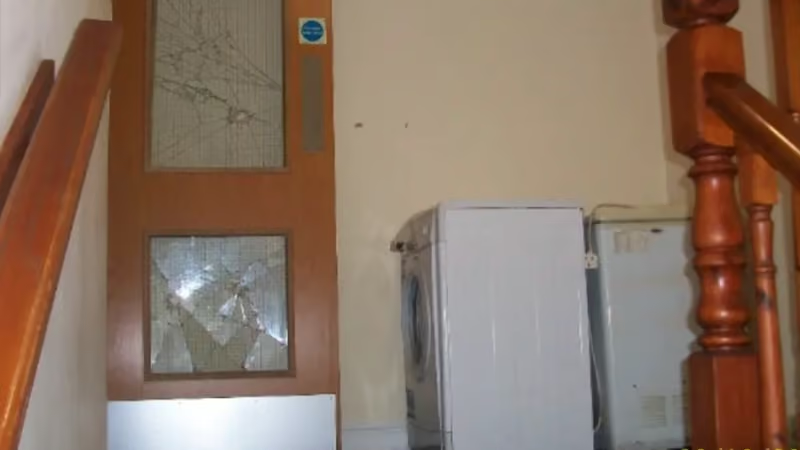
What are the hazards?

• Dampness, excess cold / heat
• Pollutants e.g. asbestos, carbon monoxide
• Lack of space, security or lighting or excessive noise
• Poor Hygiene, sanitation, water supply
• Accidents – fall, electric shock, fires, burns, scalds
• Collisions, explosions, structural collapse

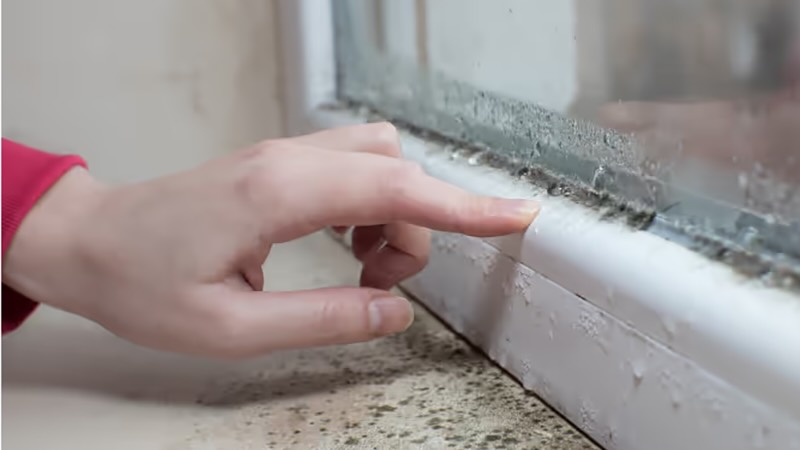
Damp and mould growth caused by rising or penetrating damp should be seen as a high priority
Condensation mould should be addressed by better ventilation and ambient temperatures

Asbestos and such like need to be removed from the property by specialist firms
Carbon Monoxide detectors should be installed

Security measures should be put in place, such as 5 lever locks on main entrance doors, security lighting with PIR detectors

Better provisions for waste products, food. Provisions for storage of cleaning agents away from food storage and preparation areas.

Constant supply of clean hot and cold water
Safeguard against trips or falls due to uneven surfaces, worn carpets etc.
Safeguard against electric shock by having the installation tested by an NICEIC contractor
Safeguard against fires by installing smoke detectors as standard, fire extinguishers and blankets in kitchens.
Safeguard against structural collapse by regular and routine maintenance throughout the letting
(Above information extracted from Asset Skills essential information for landlords and agents)

The above is the “Beef” that councils have over landlords to ensure that properties ere let to a suitable standard. Not only that, under another piece of legislations the Fire Reform Act 2007 which now make it mandatory for fire officers have to be concluded on all HMO’s to decide on the best course of action to follow to safeguard against fire.

Not all HMO’s are the same, and therefore, are treated differently once the Rating Score has been determined, but the basics are always there:

Fire Safety
Electric Safety
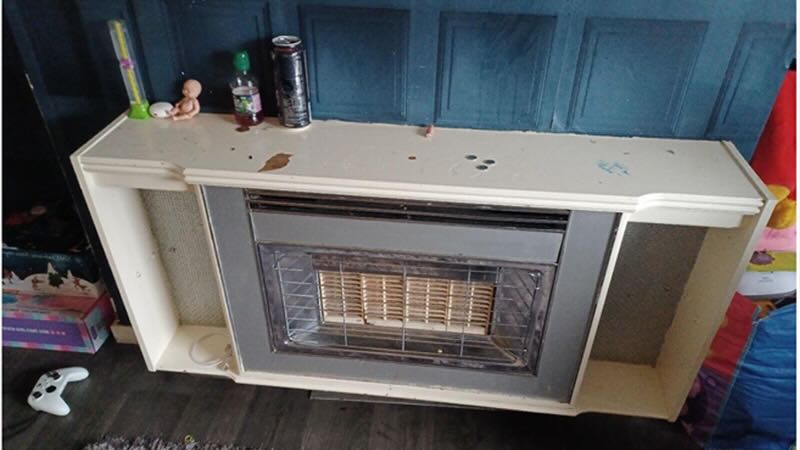
Gas Safety
Furniture Safety
Overall property standard

How is an HMO defined by the Housing Act 2004?

In principle it is the same as under the Housing Act 1985, but with subtle changes

The Housing Act 2004 now defines an HMO in three key parts, 'House', 'Occupied' and 'Not A Single Household'.

This definition of a HMO comes under sections 254-258 of the Housing Act 2004

Housing Act 2004 - Section 254

(1) “ For the purposes of this Act a building or a part of a building is a ” house in multiple occupation
“ if:

a - it meets the conditions in subsection 2 (“the standards test”)
b - it meets conditions in subsection 3 (“ the self contained flat test”)
c - it meets conditions in subsection 4 (“the converted building test”)
d - an HMO declaration is in force in respect of it under section 255
e - it is a converted block of flats to which section 257 applies

(2) A building meets the standard test if

a - it consists of one or more units of living accommodation not consisting of self contained flats
b - the living accommodation is occupied by persons who do not form a single household
(section 258)
c - the living accommodation is occupied by those persons as their only or main residence or they are to be treated as so occupying it (section 259)
d - their occupation of the living accommodation constitutes the only use of that dwelling
e - rents are payable or other consideration is to be provided in respect of at least one of
those persons’ occupation of the living accommodation
f - two or more of the households who occupy the living accommodation share one or more basic amenities or the living accommodation is lacking in one or more basic amenities

Section 257

(1) For the purpose of this section a “converted block of flats” means a building or part of a building which-

a - has been converted into, and
b - consists of,

self contained flats

(2) This section applies to a converted block of flats if-

a - building work undertaken in connection with the conversation did not comply with the appropriate building standards and still does not comply with them; and
b - less than two thirds of the self contained flats are owner-occupied.

(3) In subsection 2 “appropriate building standards” means-

a - in the case of a converted block of flats-
on which building work was competed before 1st June 1992 or which is dealt with by regulation 20 of the Building Regulation 1991 and which would not have been exempt under those Regulations

Section 258

HMOs: persons not forming a single household

This section sets out when persons are to be regarded as not forming a single household for the purposes of section 254

(2) persons are to be regarded as not forming a single household unless-

a - they are all members of the same family, or
b - their circumstances are circumstances of a description specified for the purposes of this section in regulations made by the appropriate national authority.

(3) For the purpose of subsection 2(a) a person is a member of the same family as another
person if-

a - those persons are married to each other or live together a husband and wife (or an equivalent relationship in the case of persons of the same sex);
b - one of them is a relative of the other, or
c - one of them is, or is a relative of, one member of a couple and the other is a relative of the other member of the couple

(4) For the purposes-

a - a 2couple” means two persons who are married to each other or otherwise fall within subsection (3)(a);
b - “relative” means parent, grandparent, child, grandchild, brother, sister, uncle, aunt, nephew, niece or cousin;
c - a relationship of a half-blood shall be treated as a relationship of the whole blood; and
d - the stepchild of a person shall be treated a his child

Occupied means 'lived in' (Silbers v Southwark LBC 1977). Therefore vacant houses cannot be HMOs under the legal definition.

So if the criteria fits, the property, by definition is an HMO.

HMO Properties

In the main, in residential letting, the properties that are generally associated with an HMO are student lets. However, properties can, in some areas be let to sharers due to necessity of costs or just because there is a lack of self contained affordable accommodation in that area, thus bringing them into an HMO classification. .

The other main area is properties being converted into self contained accommodation by landlords to maximise the rental yield on a property. Depending on when the property was converted and if planning permission was sought, then this type of accommodation may well fall into being an HMO.

HMO Occupation

That is the critical word “Occupation” not the number of TENANTS you have on an agreement. As the law is currently, there is no legal obligation to have an agreement in writing. Of course, it is legally safer to have a written tenancy agreement for all concerned and I would not advise any landlord to create a tenancy without a written tenancy agreement.

The crux here is that you could let a house to a couple, who sublet one room to a third unrelated person. Immediately this puts this property into an HMO classification

1 Property x 1 couple + 1 single = 3 occupiers = Two households = HMO

How many properties are no affected by this scenario?

1 Property x 3 single unrelated persons sharing = 3 households = HMO

But:

1 Property x 2 single unrelated persons sharing = 2 Households = NON HMO

Licensing of an HMO

This is the area where many people are confused. Do I have to have a licence for my property?

The main criteria - Numbers:

Numbers of People and
Numbers of Stories

A three storey property being occupied by 5 or more persons forming two or more households, is, by definition an HMO, but this type is more critical as it comes into the Mandatory licensing regime.

A two storey property occupied by 5 or more persons forming two or more households is an HMO, but would come under Additional Licensing rather than Mandatory

How is a three storey property defined?

If a property has a basement that is habitable and two other floors - classed as three storey property

If a property has a mezzanine floor and two other floors – classed as three storey

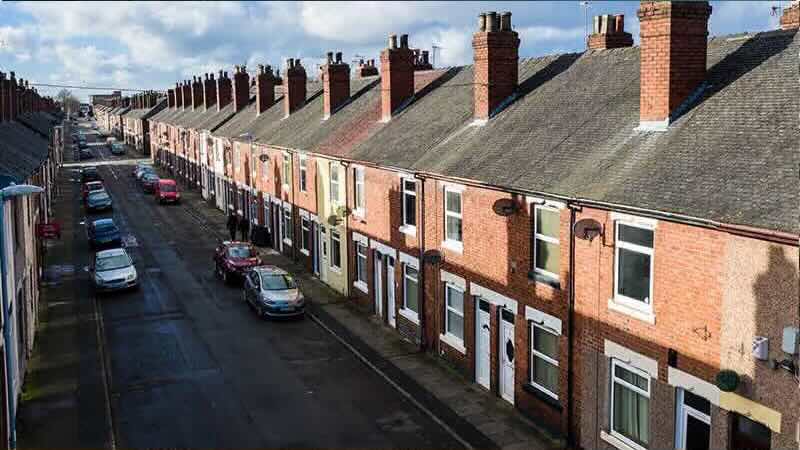
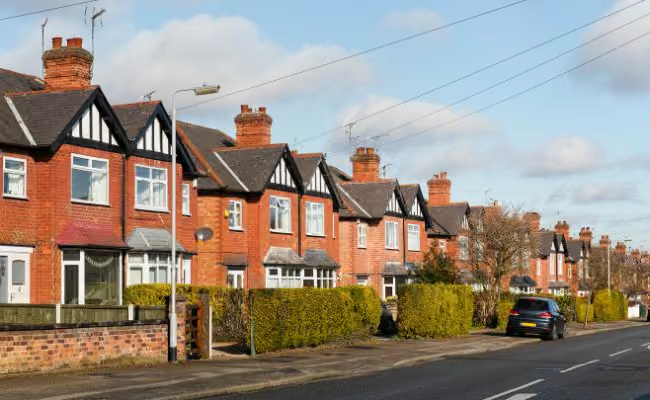
If a property has ground floor, rear annex and stair to the front part of the house ( a typical Victorian mid terraced property) – classed as three storeys

If these types of properties were occupied by 5 or more persons forming two or more households they would need to have a Mandatory License

A two storey property has just two flooring levels - Ground and First (no basement or attic conversion

A typical student property

Right, you have your three storey property which is to be occupied by 6 students, so far nothing has been done to the property as far as fire safety is concerned.

The best approach BEFORE you enter into a tenancy agreement with your tenants is to seek advice for your Local Authority. The reason is, as I have stated before many councils are adopting different approaches to the HHSRS and therefore you could be spending money on areas that you do not have to and not spending money on critical areas

There are however, certain elements that will require checking as with all rental accommodation in England and Wales:

The electrical installation:

Plugs Sockets etc (Safety) Regulations 1994
Electrical Equipment (Safety) Regulations 1994
Low Voltage Electrical (Safety) Regulations 1990

The HHSRS makes provisions that the electrical installation must be in sound condition and therefore the only way to make certain that this is safe and to the current specification – 16th Edition of the IEE wiring code, the installation must be inspected by an accredited contractor. Manu councils will only accept an NICEIC or ECA accredited contractor, although there are other accreditation bodies, these are the most widely accepted.

Plan for regular (perhaps annual) checks, as damage by tenants or alterations on the property can affect the property condition.

Gas safety (Installation and Use) Regulations 1998 and amendments

These Regulations makes it a legal obligation to ensure that ALL gas appliances, whether fixed or portable, be maintained and checked every 12 months. A record should be kept of these checks and any maintenance undertaken.

The appliances should be checked and maintained only by qualified CORGI ACOPS registered installers. The checks also apply to flues, pipework and ventilation.

Information must be supplied to the tenants of such checks and any previous maintenance work records must be made available to them.

Any breach of the Regulations could result in prosecution - with fines now up to £60,000 and/ or even imprisonment for severe non-compliance where death or injury is caused.

Fire and Furnishing (Fire) (Safety) Regulations 1988
Fire and Furnishings (Fire) (Safety) (Amendment) Regulations 1993

The Regulations apply to all upholstery and upholstered furnishing, loose fittings; permanent or loose covers, which we will refer to as "Furniture" in this article, but the technical criteria, are beyond the scope of this article.

You cannot give, sell, lend or supply in any other way Furniture that does not comply with the Regulations.

Labels must be attached to the Furniture to say that the article complies.

If no label is visible, it will be deemed NOT to comply and must be removed from the property. In certain circumstances, if document can be produced to confirm the article complies, this may be acceptable. On mattresses, if there is no label, there may be a BS number, this should be BS7177 and is acceptable.

The Regulatory Reform (Fire Safety) Order 2005

Will be a fire risk assessment based approach where the responsible person(s) for the premises or area they have control must decide how to address the risks identified, while meeting certain requirements.

By adopting a fire risk assessment , the responsible person(s) will need to look at how to prevent fire from occurring in the first place, by removing or reducing hazards and risks (ignition sources) and then at the precautions to ensure that people are adequately protected if a fire were still to occur. Therefore the main emphasis of the changes will be to move towards fire prevention.

The fire risk assessment must also take into consideration the effect a fire may have on anyone in or around your premises plus neighbouring property. The building fire risk assessment will also need to be kept under regular review.

The Local Authority I conjunction with the Fire Authority will compile a report and schedule of works to be carried out on the property to bring it inline with HMO policies.

These HMO policies should include:

Upgrading ceilings in living arrears to double thickness (12.5mm) plasterboard and Gypsum skim finish (No Artex).

Upgrading for flooring to habitable rooms with the addition of 6mm Plywood or High Density Hardboard

Provision of self closing fire doors to all habitable rooms which lead on to the stair well. These to be a minimum of half hour fire resistance, but the Fire Authority may advise that 1 hour rating be provided on kitchens.

Main interlinked automatic fire detection system (L2 or LD2) be fitted throughout the property with audible sounders situated so that each bedroom has the audibility of 75db at the bedhead. In some properties (such as listed buildings) they may recommend a sprinkler system to be installed in conjunction with an alarm system.

Emergency lighting to areas of means of escape – stairwells, halls and lobbies

Fire fighting equipment which would include 1 x 9 litre water fire extinguisher on each storey and a 1kg powder extinguisher and 1 x 1 metre blanket in each kitchen.

There will be other requirements such as bathroom and kitchen facilities

These are only, the basics, please do not reply on the above illustration as being the only areas you would need to address. CONSULT THE LOCAL AUTHORITY FIRST

Mandatory Licensing and the Landlord

I have touched on properties that need a Mandatory License, but there is more to it than just the property. The landlord must also be “A Fit and Proper Person

This is a key condition of obtaining and keeping a license – but what does it mean?

Owners or managers under Mandatory or Selective Licensing Schemes must apply. The Local Authority must grant a License IF it is satisfied that:

The HMO is reasonably suitable (etc)

The Licence holder would be a fit and proper person.

The criteria in deciding where the person is fit and proper:

The Local Authority must have regard to the statutory criteria set out in Section (66 (2) and have regard to any other facts or matters which it considers to be relevant

Matters to which the Local Authority must have regard.

• Any offence involving fraud, or other dishonesty, or violence or drugs or in Section 3 of
the Sex Offences Act 2003

• Practiced unlawful discrimination of the law in connection with the carrying out of any
business

• Contravened any provision of the law relating to housing or landlord and tenant law –
Illegal eviction etc.

• Acted other than in accordance with any code of practice for the management of HMO’s

Associates

The Local Authority may take into account evidence of any of the above conduct by a person “associated or formerly associated with”, the proposed licence holder or manager “whether on a personal, work or other basis”, if relevant.

Any “Spent” convictions cannot be taken into account. However, a lack of conviction for any offence may not mean that the incident was not relevant.

Managers

Assumption: the person having control of the property is the most appropriate person to hold the Licence. i.e. the person who receives the rents.

The proposed manager, if not the Licence Holder, and all other persons involved in the management must also be fit and proper.

The Licensing Decision

If the Local Authority is not satisfied – IT MUST REFUSE and make an Intermediate Management Order instead. Any proposed reasons to be given in advance. There are 14 days to make representations and the Right to appeal to the Residential Property Tribunal (RPT).

Some Local Authorities are also operating a “Zone”, so if the Landlord resides outside this zone an cannot reasonable demonstrate that the property is being managed properly. The Local Authority may appoint a local management agent to be the License Holder.

For the Manager this may have a serious impact on how they act for their client, as they will now have the full weight of the obligations on their shoulders rather than that of the owner.

The same would apply if the property needs to be Selectively Licensed

Additional Licensing

This is where a property is two storey and occupied by 5 or more persons forming two or more households.

Selective Licensing

The same provisions may apply as Mandatory Licensing, but these properties may only be in one area of a town or city e.g. The Local Authority may make, say the centre of a city where there is a high population of shared accommodation, or smaller HMO’s such as three person sharing a Zone for Selective Licensing where another part of the City where there is a low population of this type of property may escape.

Converted Buildings

Another type of HMO is the Converted House into Self –Contained Flats. Again these do not escape the HMO Regulations.


If a property was converted into self contained flats prior to the implementation of the 1991 Building Regulations then it will, by default become an HMO under Section 257 of the Housing Act 2004.

Therefore, the HHSRS will come into force for dealing with amenity and property standards BUT this type of property will not need to be Licensed, UNLESS one or more individual flats are occupied by five or more persons forming two or more households and the property is three storey.

If the property has been converted to the 1991 Building Regulations, there may only be upgrading of this property to meet the more stringent Regulations of Electrics, and Fire Safety Precautions, although again the Local Authority would advise the Landlord of any other works being required.

The Manager’s Role

Housing (Management of Houses in Multiple Occupation) Regulations 2006

Section 234 of the Housing Act 2004 makes provisions for the person(s) having control of the property.

The person in control of the property, namely, the Owner, Agent or whomsoever has certain duties to keep the property in safe, clean and good standard of repair. These are such areas as the water supply and drainage; common parts; windows and ventilation; means of escape from fire and disposal of refuse and litter.

The Regulations require the person in control to display a Notice containing the name, address and contact telephone of that person.

Non compliance under this Section may constitute that the person is not a “Fit and Proper Person” and therefore a License may be revoked.

The person overall in control of the property is the LICENSE HOLDER

The general running of the property is the responsibility of the MANAGER

The Manager, should have a log book to record all main events at the property, such as:

Testing of Fire Alarms
Testing of Fire Fighting Equipment
Gas Safety Certificate
Electrical Report
Inspections and wants of repair

An excellent idea is to have the occupiers sign a declaration of understanding on signing the tenancy, that they have knowledge of the working of the fire alarms, how to manage waste, what constitutes anti-social behaviour and the necessity to keep the means of escape clear of rubbish and other items, so that in the event that there is a problem, the Manager can demonstrate to the Local Authority that due diligence has been followed.

It is also good practice to record all wants of repair and what has been sanctioned by the landlord and what has not. Have a code of importance to prioritise works.

The Manager’s role in HMO properties has increased tenfold – The Manager may by choice or necessity be the License Holder as well compounding the need to adopt a more hands on approach, not forgetting the need to maintain the tenant’s Right of Quiet and Peaceful occupation of the property.

Records - Licensed Premises

There will be a public register of all properties which are Licensed.
The Register will have the name and address of the License Holder
The name and address of the Manager (if different)
The address of the HMO property
Start and duration of the License
Summary of License conditions
Number of storeys
Number of maximum occupants

Powers of the Local Authority

A Local Authority can and will prosecute a landlord who does not obtain a License for a Licensable property.

In a recent case a landlord a landlord in Leamington has been ordered to repay his tenants more than £18,000 in what is believed to be the first case of its kind in Britain.

Bajinder Bahi - known locally as Gilly - was fined more than £3,000 at Stratford Magistrates Court in June 2007 for failing to licence two flats in Warwick Street which were both occupied by students from Warwick University.

And the prosecution - thought to be the first of its kind under new housing legislation - this week led to tenants claiming back rent while the property remained unlicensed between September 2006 and June 2007.

Not only that, the landlord will be unable to serve any legal Notice on a tenant for arrears of rent or eviction under Section 21 of the Housing Act 2004.

HMO - Summary

I did say this subject was complex?

HMO Defined - More than one household sharing amenities
Buildings made up of self contained flats and being converted prior to 1991

Mandatory - High Risk

3 Storey
5+ Occupants

Additional – Lower Risk
2 Storey
3+ Occupants

All

Public Register
Prescribed Amenity Standards - bathrooms, kitchen etc
Conditions apply – Gas, Electric, Furniture, Tenancy agreements, Fire precautions
Other conditions may apply – Antisocial behaviour, waste management, local manager, log book

Want to know more ?

Robert J. Lewis FNAEA
Michael G. Lewis & Son
Residential Letting Agents
54 Mansel Street
City & County of Swansea SA1 5TE

Tel: 01792 651166

Email rob@mglewisandson.co.uk
Web www.mglewisandson.co.uk

© LandlordZONE® 1999-2008 All Rights Reserved - never rely totally on our standard answers and general content. Before taking action or not, always do your own specific research and seek appropriate professional advice with the full facts of the case and all documents to hand. LandlordZONE.co.uk®

Related Topics